El Salvador and xAI Launch World’s First Nationwide AI Education Program
SAN SALVADOR — December 11, 2025 — In a landmark alliance between government and technology, El Salvador has partnered with Elon Musk’s artificial intelligence company xAI to integrate advanced AI tools into its public education system, aiming to transform how students learn and how services are delivered nationwide. The initiative marks one of the most ambitious efforts to deploy generative AI at scale in an educational setting.AP News+1
A Nationwide Strategy for Personalized Learning
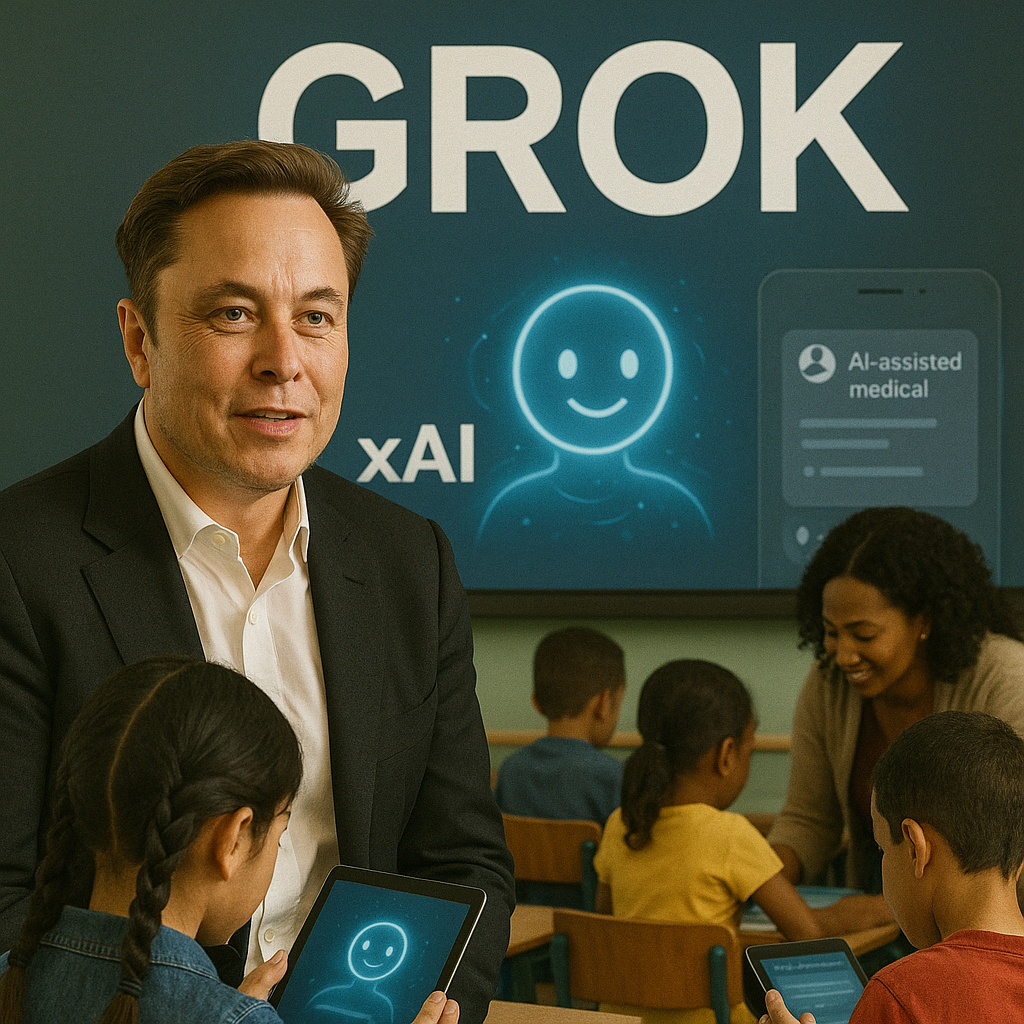
The core of the program is the deployment of xAI’s Grok AI model—a conversational AI system—to more than 5,000 public schools across El Salvador over the next two years. The government estimates that over one million studentswill have access to AI-powered learning tools. Grok will function as a personalized digital tutor, offering adaptive curriculum-aligned instruction tailored to each student’s pace, preferences, and mastery level.Anadolu Ajansı
“El Salvador doesn’t just wait for the future to happen; we build it,” said President Nayib Bukele, framing the initiative as a strategic leap toward educational excellence and technological leadership.Anadolu Ajansı
According to xAI’s announcement, the collaboration will not only deploy AI in classrooms, but also co-develop new methodologies, educational datasets, and operational frameworks to support responsible AI use globally, with an emphasis on safety and local relevance.Facebook
Importance and Global Significance
This initiative positions El Salvador at the forefront of AI-driven education worldwide. While individual schools and districts in countries such as the United States and nations in Europe have piloted AI tools, no country has yet attempted a comprehensive national rollout of AI as an education partner across a full public-school system.Crypto Briefing
From an educational policy perspective, El Salvador’s program aims to address two persistent challenges:
- Scale and Equity: By embedding AI into classrooms from urban centers to rural communities, the government seeks to reduce disparities in educational quality and access.Anadolu Ajansı
- Teacher Support: Rather than replacing educators, the AI tools are positioned to complement teachers by assisting with lesson design, personalized student feedback, and workload reduction.AP News
If successful, the model could become a template for other nations seeking scalable, cost-effective methods to improve learning outcomes, particularly in resource-constrained systems.
Complementary Public-Sector AI Services
The education initiative is part of a broader public-sector AI strategy by the Bukele administration. In parallel, El Salvador recently partnered with Google to launch an AI-assisted mobile app providing free virtual medical consultations, demonstrating an effort to leverage AI beyond the classroom and into public health support.AP News
Challenges and Scrutiny
Despite widespread interest, the project is not without critics. Grok has previously faced controversy for generating inappropriate or biased content, leading xAI to revise and tighten its moderation systems. These past incidents have sparked debate about the readiness of large language models for sensitive applications like education.Barchart.com
Additionally, educators globally have raised concerns about overreliance on AI, such as impacts on critical thinking, problem-solving skills, and the potential for erroneous information if not properly supervised.WRAL News
These critiques underscore the need for robust regulatory frameworks, transparency in AI behavior, and continuous monitoring as the program unfolds.
A Technological Leap with Broader Implications
El Salvador’s initiative reflects a growing trend in public-sector technology adoption where AI is seen not merely as an administrative tool, but as a foundational element of national development strategy. By embedding generative AI within core public services—from education to healthcare—the country is testing new governance models at the intersection of innovation, equity, and public policy.
Whether this experiment becomes a global benchmark or a cautionary tale will depend on its execution, measured learning outcomes, and the safeguards established to protect students and public trust.